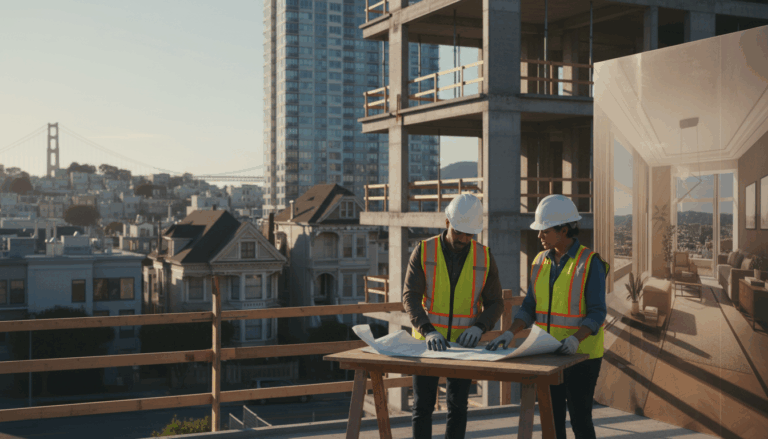

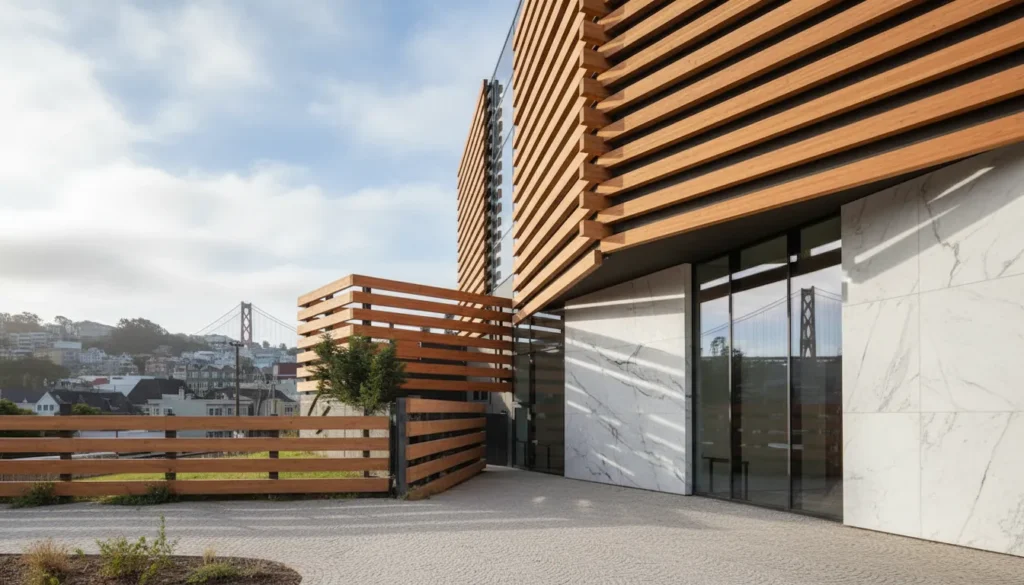
In San Francisco, materials reveal their beauty over time. You can witness this through the foggy exterior of an old building’s paint, aged metals from years of exposure to the elements, and stone steps that have stood their ground through millions of people walking on them. That’s the standard I look to set when we’re discussing whether or not something is sustainable: Will it be beautiful over time when subjected to real-life use?
If you’re looking at doing a modern renovation or building a custom home in the Bay Area, you’re likely juggling several different aspects of your project all at once. You want to create a beautiful design, create a healthy home for your family, and select finishes that you won’t regret in five years. At Frontside Construction, we want to help you make good choices that are both elevated in appearance and function like a tool. In my opinion, the best materials are those that never need to be replaced.
The New Standard: How Sustainability Shapes Material Choices
“Sustainable” used to mean one thing: recycled content, maybe a buzzword or two, and a checkmark on a spec sheet. Today, the homeowners, architects, and designers we work with are asking better questions, and that’s a good thing.
The new standard is about proof and transparency:
- Responsible sourcing (like FSC-certified wood products)
- Indoor air quality (low/zero-VOC finishes that don’t linger in your home)
- Product transparency through disclosure documentation (so you’re not guessing)
If a product can’t back up its claims, we treat it like a nice rendering with no structural plan behind it. Looks good, doesn’t last. And here’s the point that often gets missed: a “green” finish that fails early isn’t green. It’s a waste, just delayed. If you want a solid, practical overview of what to look for (and what “low-VOC” actually means in real life), Architectural Digest provides a helpful breakdown of it.
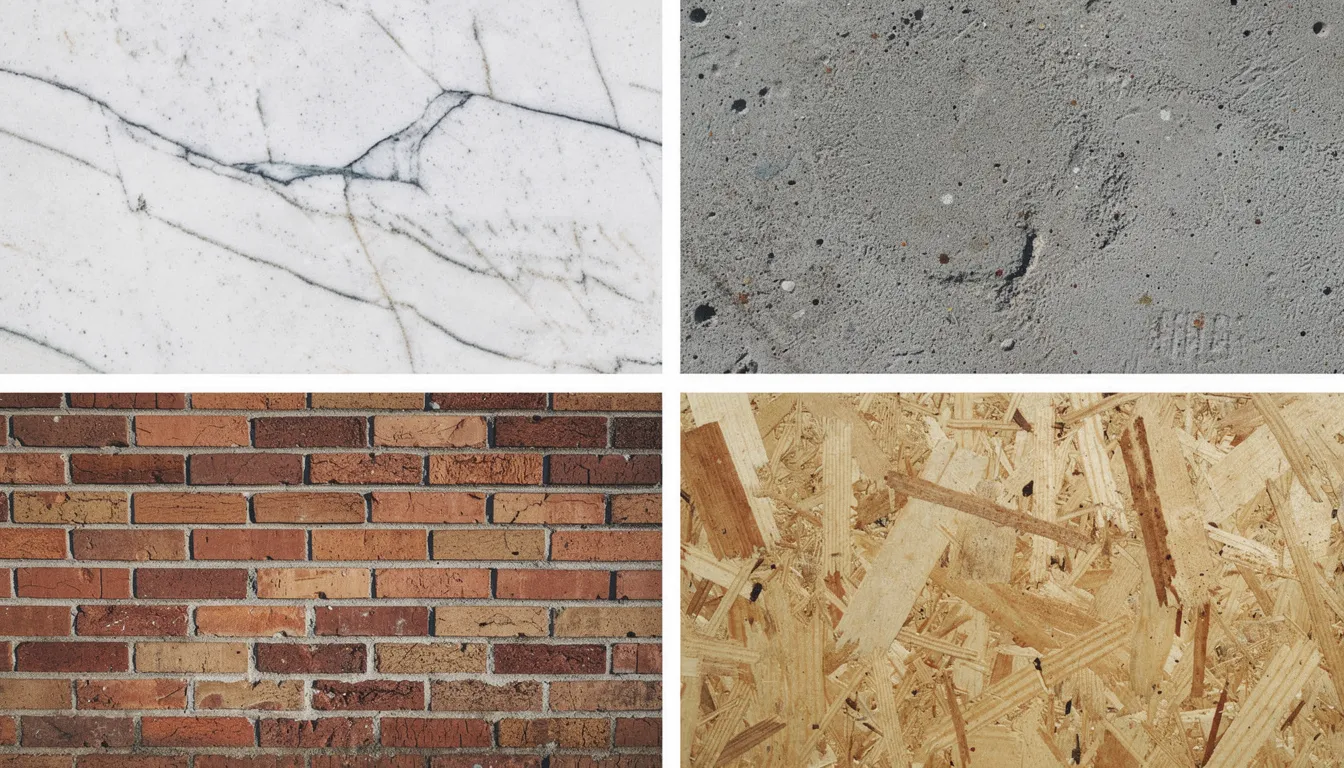
Beyond Green: Selecting Materials That Last Without Compromise
I’ll say this plainly: durability is sustainability. A finish that chips, peels, stains, or warps too easily turns into a replacement job; and that’s more labor, more material, more disruption, more cost. We’d rather do it right once.
A few finish categories that consistently earn their keep in high-use, design-forward homes:
- Mineral-based wall finishes (limewash, clay plasters): They can age with character instead of looking “tired.” They’re also often easier to repair without chasing an exact paint match.
- Thoughtfully specified real wood: Not all wood belongs everywhere, but when it’s properly sourced, sealed, and detailed for movement, it’s hard to beat.
- Porcelain and sintered surfaces: Especially for kitchens and bathrooms; places where heat, moisture, and daily wear aren’t theoretical.
- Low/zero-VOC paints and sealers: Not just for the planet, your lungs will notice.
Architectural Digest also has a straightforward, homeowner-friendly explainer on eco-paint and non-toxic options that I’ve pointed clients to more than once. As Charles Eames put it:
“The details are not the details. They make the design.”
That’s true in construction, too. The details don’t just make the look, they make the lifespan.
From Concept to Construction: Eco-Friendly Finishes That Perform
Here’s what I’ve seen over and over: a sustainable material gets specified with great intentions… and then it fails because it’s treated like a surface, not a system. This is the blue-collar truth; installation is where sustainable finishes either earn it or lose it.
Our approach is simple, but it’s not casual:
- Verify the product is real (and right).
We check documentation, performance ratings, VOC content, and suitability for the room and climate. - Match the finish to the lifestyle.
A showpiece powder room and a family kitchen with two kids and a big dog should not be treated the same, no matter how clean the mood board looks. - Detail it like it’s going to be tested, because it will be.
Substrate prep, waterproof transitions, movement joints, cure times, edge conditions. These are the quiet decisions that keep things beautiful.
This is where a true design-build collaboration makes life easier. When design and construction are on the same page early, we can protect the vision through execution.
Design Meets Durability: The Science Behind Long-Lasting Sustainable Materials
San Francisco is tough on buildings. Moisture, salt air, strong sun, and constant micro-movement. So when we’re choosing sustainable finishes, we’re thinking in practical terms:
- Moisture behavior: Will it breathe, trap, swell, or mold?
- Wear resistance: How does it handle abrasion, dents, scratches, and cleaning?
- UV stability: Does the color hold, or does it shift fast?
- Repairability: Can we maintain it without tearing half the room apart?
Mies van der Rohe is famously credited with: “God is in the details.”
In our world, that means a finish is only as good as the prep, the sequencing, and the hands that install it.
“The most sustainable finish is the one you don’t have to redo. When we pair the right material with the right execution, the home stays calm, clean, and resilient for years.” Glenn Rodgers (Frontside Construction)
Related: Why the SFSU Student Center Is Shaped Like a Boat
The Lifecycle Advantage: Why Thoughtful Material Choices Save Time and Money
When clients choose finishes with a long view, the payoff isn’t just “good ethics.” It’s a smoother life in the home.
You’re more likely to get:
- Fewer repairs and re-dos
- Less maintenance drama
- Better indoor air quality (especially with low-VOC systems)
- A home that still feels intentional years later
Sustainable doesn’t have to mean fragile or lacking “high design”. Conversely, “high design” doesn’t have to mean high cost or maintenance – it’s about great design decisions. The future is finishes that are responsible and tough; materials that look great with time because they were chosen and installed with intention.