
The Cost of Quality: Understanding Value in the Build Process
The San Francisco I walk and the places I visit are the places that the city tells its story through, the architecture it’s built and what will continue to be around. In many places only, through the structures we see as a symbol of what we have been able to build over many years, and in every case, in a historic context. From the Mission’s industrial grit to the quiet refinement of Pacific Heights, the city tells its story through what’s been built, and what’s lasted.
As I’m out on my walk through this city and seeing the light and shadows created by the sun hitting the concrete faces; I’m reminded of questions I’m asked by property owners, property developers, and property managers, frequently: Why is quality construction expensive? Is it worth the money? The answer is short, Yes. The value of a quality construction project is not based on a low-cost bid, rather, it’s measured by how well it performs, and how well it provides a sustainable environment for the occupant to live for years to come.
Why Quality Costs More and Why It’s Worth It
Building a luxurious custom home requires recognition of more than just selection of high-end finishes. When considering quality early in the construction process, you will be investing more for all aspects of durability, operational performance and how buildings deteriorate.
Architectural Digest discusses the significance of this trend, where ‘durability, craftsmanship, sustainability, and long-lasting design are becoming ever more essential to the vernacular of home building.’
“The bitterness of poor quality remains long after the sweetness of low price is forgotten.“– Frank Lloyd Wright
In a complicated city like San Francisco, which has extreme weather, extensive building codes, and extreme density, quality translates to more than just luxury, it’s required for the safety, comfort, and ease of everyday living.
The Hidden Price of the Lowest Bid
The lowest bid often hides the highest risk. When construction pricing is disconnected from design intent, details are missed and assumptions creep in. Those gaps don’t disappear, they resurface as change orders, delays, or compromised outcomes. Cost-driven decisions without builder collaboration often lead to rework and inefficiencies later in the process.
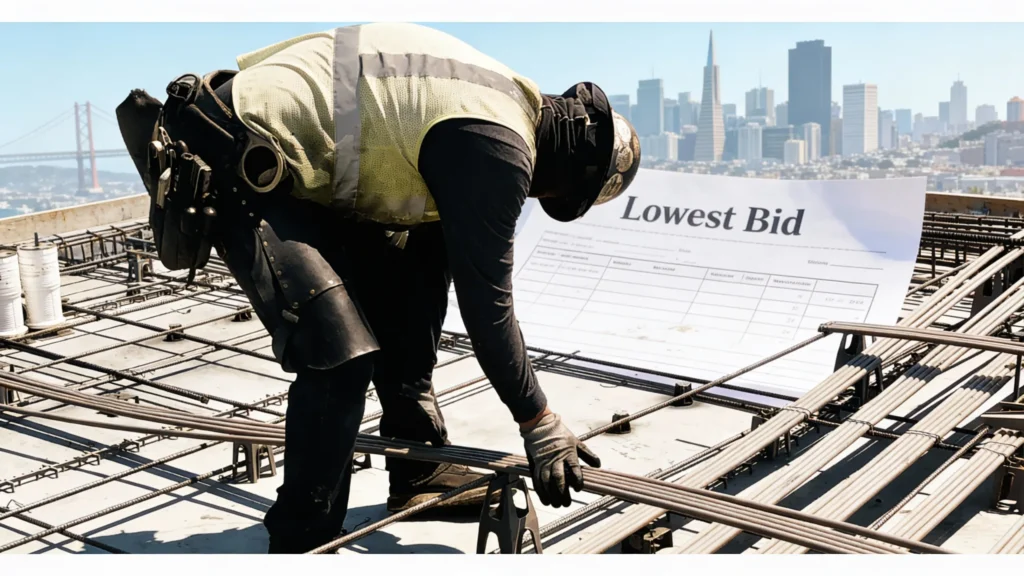
Construction companies like Frontside believe clarity is one of the most valuable line items in a budget. The approach emphasizes early coordination so expectations, scope, and sequencing are aligned before construction begins.
Build as a Value-Driven Model
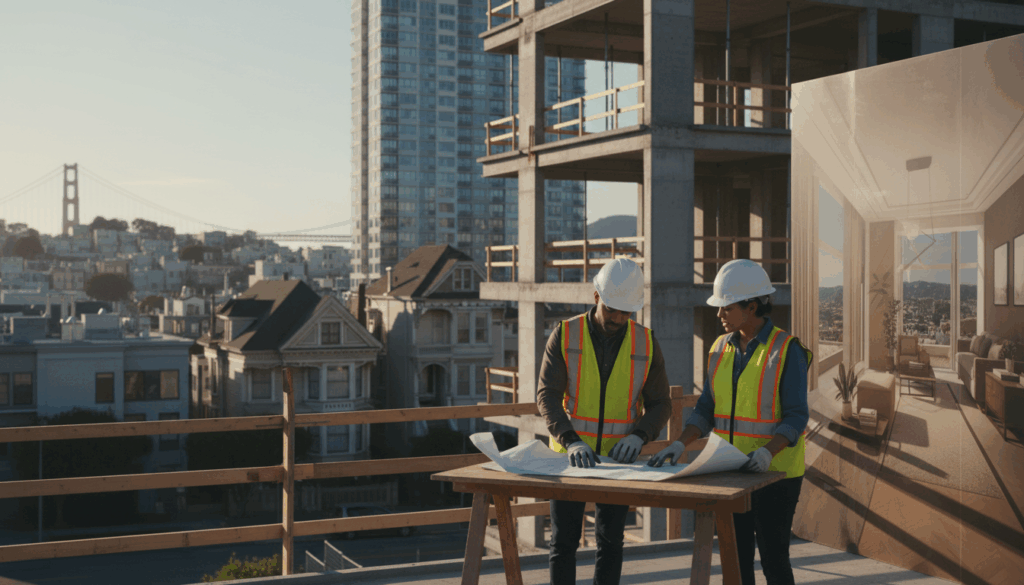
Design and execution must occur in the same dialogue. Early collaboration between architect, designer, and builder reduces risk and elevates results. When we’re involved early, we can pressure-test ideas, align materials with performance goals, and ensure that design intent survives real-world conditions.
As ArchDaily points out, design-build projects encourage teamwork in design and construction, making way for fewer instances of miscommunication, fewer change orders, and fewer delays than would otherwise occur in traditional methods of design and construction.
“Architecture is the learned game, correct and magnificent, of forms assembled in the light.”- Le Corbusier
However, such forms can only be effective if the implementation is carried out according to the design.
Where Craftsmanship Impacts Long-Term Costs
Craftsmanship isn’t about excess, it’s about precision. This is the detail that goes into flashing a window, the transition of materials, the tolerance of the flash. These are the invisible details that create the difference between a home that functions well, like a beautiful machine, or a home that requires a lot of maintenance.
“We don’t just renovate homes. We shape them to move with the people inside,” I often say. When craftsmanship is done right, it feels effortless, but that ease is earned through discipline and experience.
This approach plays out in our Projects, where details are not Architectural Ornament but deliberate and design-driven.
Making Smart Investments Early in the Process
Most economic choices made during the construction process happen before the first wall is erected. It’s pre-construction where clarity is developed. This is the phase of design where intentions are stress-tested against actual conditions of budget, schedule, site constraints, and material properties. The best use of time is made here.
Considerate review of the materials selected helps ensure that finishes are lovely in concept, yet also suitable for environmental conditions, intended use, and lifespan. Where specifics are meticulously documented, less confusion is present in implementation, allowing contractors to complete the work precisely as intended.
In a dense environment like San Francisco, where logistics, permits, and site access may rival the complexity of building design itself, it’s not an option but an imperative to plan proactively. The clearer it is up front, the fewer concessions later. This is where experience pays off as an asset not as a shortcut, but as foresight.
The Value of Adding Experience Saves You Time and Money
Experience doesn’t just solve problems. It prevents them from happening in the first place. An experienced San Francisco contractor understands how a project actually moves, from permitting timelines and inspection sequences to how multiple trades share limited space on a tight site. That understanding translates into fewer delays, cleaner coordination, and steadier progress.
When teams are sequenced correctly and expectations are aligned early, friction disappears. Decisions happen faster. Work flows. And the project maintains its rhythm.
Good construction should feel effortless when it’s done right. But that ease is never accidental. It’s the result of years spent refining systems, building trusted relationships with trades, and developing judgment that can’t be rushed or replicated. Experience is not an added cost. It’s a form of insurance, one that protects both schedule and sanity.
Redefining Value Beyond the Initial Budget
Value isn’t what you spend. It’s what lasts. A well-built home performs quietly in the background of daily life. It adapts to changing needs, ages gracefully, and requires fewer interventions over time. Mechanical systems work as intended. Materials wear in, not out. Details remain intact because they were built with care from the start.
That’s the real return on investment not just resale value, but lived value. We align the architectural vision with executional precision.
When value is measured over the life of a building not just at contract signing quality stops being a premium and starts becoming the standard.The role of a construction company is to guide our clients through complexity with clarity.
“Design and execution shouldn’t be separate conversations. That’s where Frontside comes in.”-Glenn Rodgers
Quality isn’t an upgrade, it’s a plan.